


📺 Subscribe to RFM for more witty and thought-provoking clips on religion, politics, atheism, and philosophy ✨
To support our cause, and get exclusive perks, join as a member: https://www.youtube.com/channel/UCljvYWfpldIr8mi_ZACLuXg/join
Your support makes our channel possible, and your contribution directly promotes freethinking, curiosity, honesty, and intellectual courage!
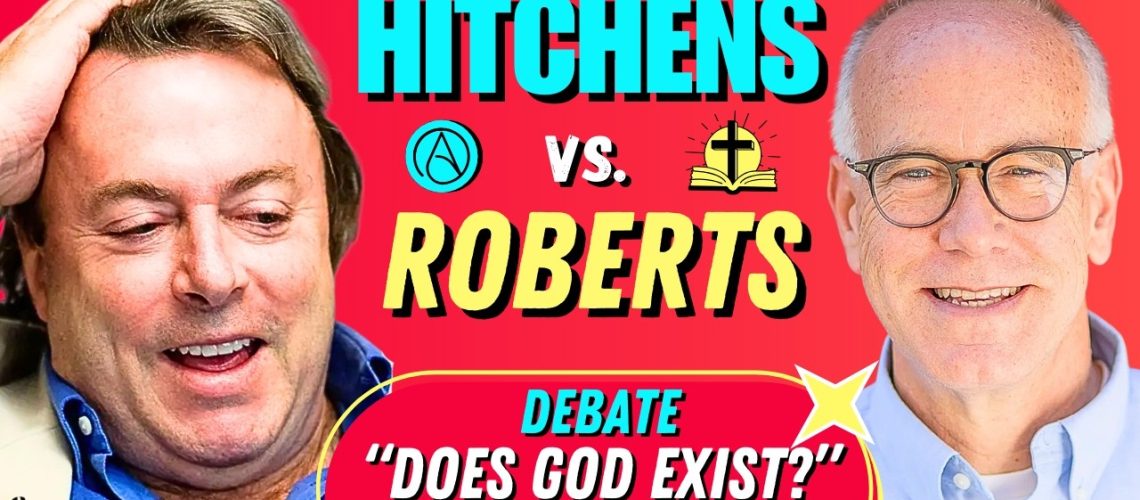
Christopher Hitchens takes on Christianity in a sharp and uncompromising radio debate where he defends secularism, reason, and free inquiry against the claims of faith. Drawing on arguments from his book God Is Not Great, Hitchens challenges the credibility of scripture, the idea of divine authority, and the long history of religious power that influenced politics, morality, education, and law. He explains why Christianity has never been a reliable foundation for ethics, why miracles and revelation do not stand up to scrutiny, why religious institutions resist progress, and why appeals to faith weaken any honest search for truth.
Throughout the discussion, Hitchens exposes contradictions in Christian doctrine, questions the logic of sin and redemption, and dismantles the claim that belief in a creator provides moral clarity. He contrasts secular humanism, which bases ethics on human welfare and reason, with authoritarian ideas that depend on obedience to a supernatural ruler. He argues that a truly free society relies on open criticism, skepticism, and the complete separation of church and state, not on inherited dogma or claims of divine certainty. With clarity and precision, Hitchens shows how religious authority has often obstructed science, justified injustice, and limited freedom of thought.
This debate highlights the central themes of atheism, secular philosophy, and the need to challenge unexamined beliefs. It also demonstrates why Hitchens insisted on the right to question any doctrine, why religious ideas must be open to criticism like any other idea, and why reason must be the final judge of what we accept as true. How much authority should ancient texts really have over modern life, and what do we gain when we rely on evidence, not faith, to understand the world?
source