

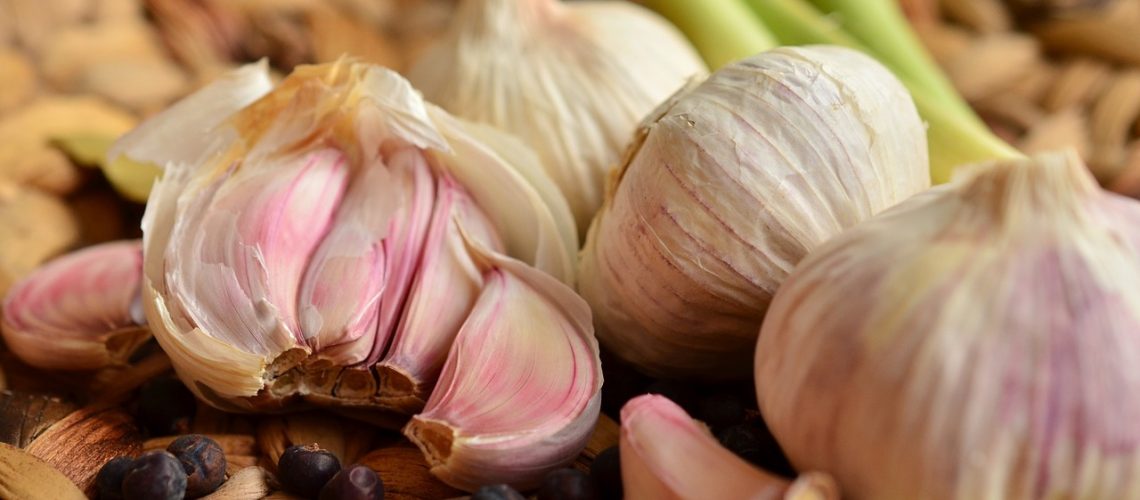

- Garlic’s use as both food and medicine spans over 5,000 years, with evidence from ancient Egypt, Greece, Rome, China and India.
- Modern scientific research confirms historical uses, showing garlic supports cardiovascular health, metabolic function and immune response.
- The key bioactive compound, allicin, is released when garlic is crushed or chopped, but its instability poses a challenge for bioavailability.
- Cultures worldwide independently concluded garlic enhanced strength and treated ailments, feeding it to laborers, soldiers and athletes.
- Contemporary studies continue to explore garlic’s potential in areas like cancer risk reduction and anti-microbial effects, validating its enduring legacy.
For over five millennia, across continents and cultures with no shared language or contact, one pungent plant has been consistently revered. From the tombs of Egyptian pharaohs to the prescriptions of Greek physicians and the kitchens of a modern “Blue Zone” island, garlic has been employed as a staple food, a protective talisman and a foundational medicine. Today, a growing body of scientific research is methodically confirming what ancient civilizations intuitively understood: Allium sativum possesses significant health-promoting properties, securing its status not as a fleeting wellness trend but as a enduring pillar of natural medicine.
A historical tapestry of use
The historical record of garlic is as rich as its flavor. Archaeologists discovered well-preserved cloves in the tomb of Tutankhamen, and the Egyptian medical text Codex Ebers from around 1550 BCE documents its use in over 20 treatments for conditions ranging from parasites to abnormal growths. Ancient cultures, despite their isolation, converged on similar applications. The Greeks fed garlic to Olympic athletes as an early performance enhancer, while Hippocrates prescribed it for respiratory issues and digestive troubles. Roman naturalist Pliny the Elder listed 23 medicinal uses, and Roman legions consumed it for strength and endurance.
This pattern repeated globally. In ancient India, Ayurvedic texts like the Charaka-Samhita recommended garlic for heart disease and arthritis over 2,000 years ago. In China, it was integrated into medical traditions for treating fatigue, depression and respiratory complaints. The thread continued through the Middle Ages, where it was grown in monastery gardens and used as a protective agent during plagues, earning the nickname “Russian penicillin” during World War II for its antimicrobial use. This unanimous, cross-cultural endorsement points to observable, reproducible effects that modern science has sought to quantify.
The science behind the folklore
Modern research has shifted the dialogue from folklore to biochemistry, identifying garlic as a “polyphenolic and organosulfur-enriched nutraceutical.” Its most studied bioactive compound, allicin, is formed when raw garlic is crushed or chopped, triggering the enzymatic reaction responsible for its distinctive aroma and many of its benefits. Allicin and its metabolites are now known to exhibit antioxidant, anti-inflammatory and antimicrobial activities.
Human intervention studies have provided compelling evidence for specific health applications. Meta-analyses of clinical trials consistently show that garlic supplementation can lead to modest but significant reductions in both systolic and diastolic blood pressure, particularly in individuals with hypertension. It has also demonstrated a capacity to lower total and LDL (“bad”) cholesterol levels, contributing to improved cardiovascular risk profiles. For metabolic health, garlic shows promise in helping regulate blood glucose and lipid levels, which is relevant for managing Type 2 diabetes and metabolic syndrome.
Exploring brother therapeutic horizons
Beyond cardiometabolic benefits, research explores garlic’s potential in other domains. Epidemiological studies have suggested an association between high garlic consumption and a reduced risk of certain cancers, particularly those of the gastrointestinal tract, such as gastric and colorectal cancers. While not a cure, its bioactive compounds may support protective mechanisms at various stages of cancer development. Its broad-spectrum antimicrobial properties, attributed to a suite of compounds rather than a single agent, make it a subject of interest in an age of growing antibiotic resistance, as bacteria struggle to develop resistance to its multi-faceted attack.
A central challenge remains: bioavailability. Allicin is unstable and quickly metabolized, meaning its therapeutic window is narrow. This has led to a market for aged garlic extracts, enteric-coated supplements and other formulations designed to enhance delivery and stability. The consensus is that consistent, dietary consumption of fresh garlic is foundational, with supplements offering a more standardized, if sometimes less complex, alternative.
A living tradition in modern kitchens
The scientific narrative finds a living counterpart in regions known for health and longevity. On the Greek island of Ikaria, a designated Blue Zone where residents frequently live past 100, garlic is a non-negotiable daily ingredient and a cornerstone of folk medicine. Locals like beekeeper Yiorgos Stenos, in his 90s, recall a traditional infusion of garlic, sage, mountain tea and honey serving as the “penicillin” of his generation. Contemporary Ikarian cuisine, as documented by cookbook author Diane Kochilas, uses garlic abundantly—in zesty spreads like skordalia, in dressings for legume salads, slow-cooked in vegetable stews (soufico), and as an aromatic base for simple pasta dishes and rustic meat stews.
An enduring legacy for contemporary health
The story of garlic is a rare continuum where ancient empirical wisdom and modern clinical research align. It has survived the rise and fall of medical dogmas, never being wholly dismissed because its observable benefits persisted. While not a panacea, garlic’s confirmed effects on cardiovascular and metabolic health, coupled with its antimicrobial and potential chemoprotective properties, provide a strong evidence-based argument for its regular inclusion in the diet. Its journey from the pyramids to the pharmacy shelf underscores a fundamental truth often echoed in integrative health: Some of the most powerful medicinal agents have been growing in our gardens and flavoring our food for thousands of years. In an era of complex synthetic drugs, the humble garlic clove is a testament to the enduring power of natural, whole-food medicine.
Sources for this article include: